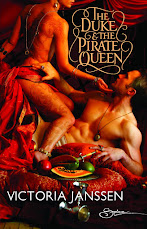
From The Burning Pen: Sex Writers on Sex Writing, Simon Sheppard's essay "Mondo Pomo Porno":
"So one of the things porn can do, especially well-crafted, thoughtful erotica, is help convince us that sex is worth not just talking about but thinking about. In depth. ...erotica is given the freedom to speak of consequences, to admit that, yes, desire can be frightening and awful and truly destructive but is worth pursuing all the same."
"Sure, fiction is made up, and writers are liars. But that doesn't mean we should be dishonest liars. Each of us has a truth to tell...genre writing can become transcendent if it's written from the heart."
Related Posts: Making It Good and Preliminary Thoughts on Two Types of Erotic Novels.
Saturday, February 28, 2009
Friday, February 27, 2009
the big bang theory of fiction
The "Muppet Morsels" glosses on my DVDs of The Muppet Show are sometimes only loosely related to the episode, so it's hard to remember where this one came from.
I paraphrase: "every skit ends with either an explosion or a digestion."
I.e., something blows up, or somebody gets eaten.
This could be generally applicable to all fiction.
Boom! Nom nom nom.
Books would be a lot more fun if it was literal.
Elizabeth and Darcy marry--and a giant sheep eats Lady Catherine De Burgh!
Moby Dick explodes!
David Copperfield turns into a zombie and eats everyone!
Your suggestions?
Happy Friday!
I paraphrase: "every skit ends with either an explosion or a digestion."
I.e., something blows up, or somebody gets eaten.
This could be generally applicable to all fiction.
Boom! Nom nom nom.
Books would be a lot more fun if it was literal.
Elizabeth and Darcy marry--and a giant sheep eats Lady Catherine De Burgh!
Moby Dick explodes!
David Copperfield turns into a zombie and eats everyone!
Your suggestions?
Happy Friday!
Thursday, February 26, 2009
Learning Who Your Characters Are
I am not one of those writers whose characters talk to them, not in the literal hearing-voices-in-your-head way, nor do I like using that as a metaphor for character creation. Probably because I like to be in control. I also think that's why I never got into role-playing games; I didn't want other people's ideas interfering with my own and changing them. I talk to other people about my characters sometimes, and have used ideas others have given me, but I don't think that's the same; I'm still in charge of my own characters.
But enough about me wearing a crown and being The Mighty Dictator.
What techniques do I use?
1. Give character a name and gender. This in itself often tells me other things; for example, to pick a name I might have to know the character's ethnicity.
2. Figure out the character's function in the story. Sometimes, often, this comes before name and gender.
3. I don't write the biography of my character. I usually make things up as I need them, or as they occur to me. A novel character might be the sidekick in the previous novel. Before, we know he had two sisters. Now that he's a protagonist, those sisters need names and problems.
4. If I get stuck, sometimes I make notes. I've tried the "list of adjectives to describe X" technique with some success. Also, "what are X's problems, and what in his character made these problems terrible to him?"
A technique I've used a couple of times as a starting point is to use the characteristics of a particular Zodiac sign or personality type diagram.
5. I write scenes with the character included. Dialogue is most fun and works well for me, and is most likely to produce revelations. Arguments are good. Losing control is good. What is she like then? I don't think a writer can really understand a character until they've written her into scenes, because the way she is in your head is never exactly the same as she appears on paper (at least for me). Tipsheets are fine, but it's showing the character in action that makes her live.
6. Finally, there's letting go. Sometimes I stop and do something else for a while, like reading or going for a walk. When I go back to work, sometimes my subconscious has come up with connections I hadn't realized before, such as "Josefina's mother was a union organizer," which I can then work into the story.
Related posts:
Caring About Your Characters - Or Not.
Zero Drafting.
But enough about me wearing a crown and being The Mighty Dictator.
What techniques do I use?
1. Give character a name and gender. This in itself often tells me other things; for example, to pick a name I might have to know the character's ethnicity.
2. Figure out the character's function in the story. Sometimes, often, this comes before name and gender.
3. I don't write the biography of my character. I usually make things up as I need them, or as they occur to me. A novel character might be the sidekick in the previous novel. Before, we know he had two sisters. Now that he's a protagonist, those sisters need names and problems.
4. If I get stuck, sometimes I make notes. I've tried the "list of adjectives to describe X" technique with some success. Also, "what are X's problems, and what in his character made these problems terrible to him?"
A technique I've used a couple of times as a starting point is to use the characteristics of a particular Zodiac sign or personality type diagram.
5. I write scenes with the character included. Dialogue is most fun and works well for me, and is most likely to produce revelations. Arguments are good. Losing control is good. What is she like then? I don't think a writer can really understand a character until they've written her into scenes, because the way she is in your head is never exactly the same as she appears on paper (at least for me). Tipsheets are fine, but it's showing the character in action that makes her live.
6. Finally, there's letting go. Sometimes I stop and do something else for a while, like reading or going for a walk. When I go back to work, sometimes my subconscious has come up with connections I hadn't realized before, such as "Josefina's mother was a union organizer," which I can then work into the story.
Related posts:
Caring About Your Characters - Or Not.
Zero Drafting.
Wednesday, February 25, 2009
Philadelphia Fantastic Reading
I'll be reading at Philadelphia Fantastic this week:
February 27, 2009
7:30 pm
Moonstone Art Center
110A S. 13th Street (13th and Sansom)
Philadelphia, PA
Philly Fantastic readings usually last approximately an hour, so this is a long reading. Attendees are invited out afterwards for dinner and/or drinks.
February 27, 2009
7:30 pm
Moonstone Art Center
110A S. 13th Street (13th and Sansom)
Philadelphia, PA
Philly Fantastic readings usually last approximately an hour, so this is a long reading. Attendees are invited out afterwards for dinner and/or drinks.
Tuesday, February 24, 2009
Sex scenes in romance novels: what I like
Sex scenes in romance novels, I feel, need to move the plot along by encompassing some sort of character change or modulation. But what else makes a sex scene a success? Clearly, it's one of those questions in which individual mileage can vary. Here's a list of what I think makes a great sex scene, though I don't think all of these things necessarily need to be in the same scene.
1. At least one character with an emotional stake in the proceedings, who needs/wants something from the sex or from the relationship.
2. A character who is hiding something. This may be emotional, physical, or plot-related, but I think it adds a level of tension to the scene.
3. Intense focus from at least one of the characters. If at least one of the characters is deeply involved in what's going on, I as a reader am usually going to be involved, too.
4. Something new is revealed about at least one of the characters, preferably a thing that implies many other things. The relationship and the characterizations can thus grow and deepen after the scene is over.
5. Economy of action: only the actions essential to the scene are described, i.e., those actions that underline the scene's emotional or thematic arc, or explicate character, or both. This is mainly because I love tidiness.
What do you like to see in romance novel sex scenes?
1. At least one character with an emotional stake in the proceedings, who needs/wants something from the sex or from the relationship.
2. A character who is hiding something. This may be emotional, physical, or plot-related, but I think it adds a level of tension to the scene.
3. Intense focus from at least one of the characters. If at least one of the characters is deeply involved in what's going on, I as a reader am usually going to be involved, too.
4. Something new is revealed about at least one of the characters, preferably a thing that implies many other things. The relationship and the characterizations can thus grow and deepen after the scene is over.
5. Economy of action: only the actions essential to the scene are described, i.e., those actions that underline the scene's emotional or thematic arc, or explicate character, or both. This is mainly because I love tidiness.
What do you like to see in romance novel sex scenes?
Mark Twain on Mardi Gras
"The largest annual event in New Orleans is a something which we arrived too late to sample--the Mardi-Gras festivities. I saw the procession of the Mystic Crew of Comus there, twenty-four years ago--with knights and nobles and so on, clothed in silken and golden Paris-made gorgeousnesses, planned and bought for that single night's use; and in their train all manner of giants, dwarfs, monstrosities, and other diverting grotesquerie--a startling and wonderful sort of show, as it filed solemnly and silently down the street in the light of its smoking and flickering torches; but it is said that in these latter days the spectacle is mightily augmented, as to cost, splendor, and variety. There is a chief personage--'Rex;' and if I remember rightly, neither this king nor any of his great following of subordinates is known to any outsider. All these people are gentlemen of position and consequence; and it is a proud thing to belong to the organization; so the mystery in which they hide their personality is merely for romance's sake, and not on account of the police.
"Mardi-Gras is of course a relic of the French and Spanish occupation; but I judge that the religious feature has been pretty well knocked out of it now. Sir Walter has got the advantage of the gentlemen of the cowl and rosary, and he will stay. His medieval business, supplemented by the monsters and the oddities, and the pleasant creatures from fairy-land, is finer to look at than the poor fantastic inventions and performances of the reveling rabble of the priest's day, and serves quite as well, perhaps, to emphasize the day and admonish men that the grace-line between the worldly season and the holy one is reached. "
--Mark Twain, Life on the Mississippi (1883)
"Mardi-Gras is of course a relic of the French and Spanish occupation; but I judge that the religious feature has been pretty well knocked out of it now. Sir Walter has got the advantage of the gentlemen of the cowl and rosary, and he will stay. His medieval business, supplemented by the monsters and the oddities, and the pleasant creatures from fairy-land, is finer to look at than the poor fantastic inventions and performances of the reveling rabble of the priest's day, and serves quite as well, perhaps, to emphasize the day and admonish men that the grace-line between the worldly season and the holy one is reached. "
--Mark Twain, Life on the Mississippi (1883)
Monday, February 23, 2009
Synergy in Writing and Research
A good thing about writing several novels one after the other is that it becomes easier to notice patterns in the way one works.
Some things I learned are generally applicable. For example, this time I know stretches of rough draft in which nothing happens will eventually make sense, or they won't, and if they don't make sense, I can cut them. I know now I will cut a lot. Thousands of words with each draft. Paradoxically, that makes it easier for me to put words on the page. Thank you, Greg Frost, for "give yourself permission to write crap," no matter whose pithy quote it was in the beginning.
Another thing I've noticed is that research isn't something one does and then is finished with. There seems to be a baseline amount of knowledge my mind needs, but once I've hit that level, ideas start to form, and I start writing. In the course of writing, I discover things I need to know, often small but important things, like "if she buys a hat in this particular summer, what kind will it be, and how much will it cost?" Then I go and find that out and slip it into the text. Sometimes I use placeholder information until I have a chance to research again; this is rough draft, after all.
Other times, the research process is more nebulous. If feeling stuck, not stuck enough to stop writing, but stuck enough that inspiration would be welcome, research can help. For example, I can read period newspapers and make notes, with few expectations beyond, "see if I can find anything about Thanksgiving." And in the course of that generalized reading, come across some facts about a sugar shortage which I can use to shore up an event I'd already written in the text.
Then there's the research that's going on parallel to the writing. This is usually books. I generally search for books in groups by topic, work my way through those, and then move on to another topic; this seems to help my mind organize what it's learning. Books are good because, unlike the microfiche machine, I can carry them around, marking pages with sticky notes or making notes in my notebook, or sometimes typing up the notes for easy reference when I have my laptop and nothing else.
These books are often where the synergy comes in. I'm writing, writing, writing, and sometimes my parallel track of reading shows me, "That thing that happened to this guy, it can happen to my guy! Except with my guy, it would be like this..." and I'm off. Then I go to the other books I've accumulated on that topic, and get more ideas, and so on.The only trick to this is explained in another pithy quote I got from Greg, and this one is his own, I think: "Don't research it to death," which is what he told me years ago when I began my first attempt at a historical. Just because I'm using a book for research doesn't mean I have to read every word. I skim as much as I can, to the parts I know I can use. (Sure, I get involved in reading probably not-useful bits every now and again, but I try to avoid this.) If I need those bits I skimmed over, I can always go back to the book later. Initially, I am ruthless. I pillage for what's useful, because if I read everything, I won't have time to write. If I don't write, I won't know what I need to research next. And then where would I be? Looking at an unfinished manuscript, no doubt.
Related Post: Reading for the Writer.
Some things I learned are generally applicable. For example, this time I know stretches of rough draft in which nothing happens will eventually make sense, or they won't, and if they don't make sense, I can cut them. I know now I will cut a lot. Thousands of words with each draft. Paradoxically, that makes it easier for me to put words on the page. Thank you, Greg Frost, for "give yourself permission to write crap," no matter whose pithy quote it was in the beginning.
Another thing I've noticed is that research isn't something one does and then is finished with. There seems to be a baseline amount of knowledge my mind needs, but once I've hit that level, ideas start to form, and I start writing. In the course of writing, I discover things I need to know, often small but important things, like "if she buys a hat in this particular summer, what kind will it be, and how much will it cost?" Then I go and find that out and slip it into the text. Sometimes I use placeholder information until I have a chance to research again; this is rough draft, after all.
Other times, the research process is more nebulous. If feeling stuck, not stuck enough to stop writing, but stuck enough that inspiration would be welcome, research can help. For example, I can read period newspapers and make notes, with few expectations beyond, "see if I can find anything about Thanksgiving." And in the course of that generalized reading, come across some facts about a sugar shortage which I can use to shore up an event I'd already written in the text.
Then there's the research that's going on parallel to the writing. This is usually books. I generally search for books in groups by topic, work my way through those, and then move on to another topic; this seems to help my mind organize what it's learning. Books are good because, unlike the microfiche machine, I can carry them around, marking pages with sticky notes or making notes in my notebook, or sometimes typing up the notes for easy reference when I have my laptop and nothing else.
These books are often where the synergy comes in. I'm writing, writing, writing, and sometimes my parallel track of reading shows me, "That thing that happened to this guy, it can happen to my guy! Except with my guy, it would be like this..." and I'm off. Then I go to the other books I've accumulated on that topic, and get more ideas, and so on.The only trick to this is explained in another pithy quote I got from Greg, and this one is his own, I think: "Don't research it to death," which is what he told me years ago when I began my first attempt at a historical. Just because I'm using a book for research doesn't mean I have to read every word. I skim as much as I can, to the parts I know I can use. (Sure, I get involved in reading probably not-useful bits every now and again, but I try to avoid this.) If I need those bits I skimmed over, I can always go back to the book later. Initially, I am ruthless. I pillage for what's useful, because if I read everything, I won't have time to write. If I don't write, I won't know what I need to research next. And then where would I be? Looking at an unfinished manuscript, no doubt.
Related Post: Reading for the Writer.
Sunday, February 22, 2009
Suspension of Disbelief in Romance Novels versus Short Erotic Stories
I'm not making a huge point here, but I think it might be a significant one for how I approach writing erotica as opposed to longer romantic works. I think the reader of a short erotica story is more willing to make assumptions from little evidence. They know where the story is leading; it is leading to two characters having sex; so for that to happen, the relationship (romantic, purely physical, whatever) must exist, so it does exist, at least so long as the writer has given the reader a tiny, tiny hook on which to hang their belief.

In a romance novel, things have to ring true for a long time, sinking into the reader's mind bit by bit, like building a wall. Sure, a reader of Romance knows the genre, knows what's expected, knows how things will turn out; but as I've said before, because of that, process (how the relationship progresses) is often more important in a romance novel than outcome (happy ending). So if the process isn't believable, the story falls apart and the reader falls out of that world.
Related Posts: Making It Good and Preliminary Thoughts on Two Types of Erotic Novels.

In a romance novel, things have to ring true for a long time, sinking into the reader's mind bit by bit, like building a wall. Sure, a reader of Romance knows the genre, knows what's expected, knows how things will turn out; but as I've said before, because of that, process (how the relationship progresses) is often more important in a romance novel than outcome (happy ending). So if the process isn't believable, the story falls apart and the reader falls out of that world.
Related Posts: Making It Good and Preliminary Thoughts on Two Types of Erotic Novels.
Saturday, February 21, 2009
Revisions Take Time
I have rediscovered something, while working on revisions for The Moonlight Mistress: available time to write does not directly translate into wordcount.
If I'm writing dialogue or description, but most especially dialogue, the words pile up faster. Word acquisition slows when I'm making subtle changes, or changes in many places throughout the manuscript.
I think there are a couple of reasons for revisions being slower. One is that I spend time scrolling or searching around in the document for the things I need to change. The other is that each change requires time to think, and if the changes aren't related to one another, each one requires a little thinking time of its own.
If I'm just adding in a scene, I can start at the beginning and proceed to the end, or an end; also, I've usually thought about what I'm going to do in that scene before I sit down, so it's just drafting, or if I'm really lucky, transcribing.
Why do I ponder these questions? Well, I feel better about my writing if I feel in control of it. It's not something one can control in every aspect, but knowing how I work, and that my methods have been successful in the past, is reassuring. Understanding my process makes me feel more in control of my process. And if I feel more in control, I won't panic and flail and be unable to finish what I'm working on.
Related Posts: Revision Metaphors. The Art of Waiting.
Pithy Writing Advice.
If I'm writing dialogue or description, but most especially dialogue, the words pile up faster. Word acquisition slows when I'm making subtle changes, or changes in many places throughout the manuscript.
I think there are a couple of reasons for revisions being slower. One is that I spend time scrolling or searching around in the document for the things I need to change. The other is that each change requires time to think, and if the changes aren't related to one another, each one requires a little thinking time of its own.
If I'm just adding in a scene, I can start at the beginning and proceed to the end, or an end; also, I've usually thought about what I'm going to do in that scene before I sit down, so it's just drafting, or if I'm really lucky, transcribing.
Why do I ponder these questions? Well, I feel better about my writing if I feel in control of it. It's not something one can control in every aspect, but knowing how I work, and that my methods have been successful in the past, is reassuring. Understanding my process makes me feel more in control of my process. And if I feel more in control, I won't panic and flail and be unable to finish what I'm working on.
Related Posts: Revision Metaphors. The Art of Waiting.
Pithy Writing Advice.
Friday, February 20, 2009
Types of Paranormal Romance
I first entered writing through science fiction and fantasy, and still read from that perspective when, these days, I read paranormal romance. I enjoy deconstructing the elements of the genre, and comparing and contrasting paranormals to non-romantic fantasy. Maybe it's because I don't have cable.
Here are some of my thoughts. There's a theory I've heard from various writers that the Romance and Mystery genres are based in plot, while the Science Fiction and Fantasy genres are based in setting. It's easier to blend one of the plot-based genres with one of the setting-based genres, so it's not uncommon to find science fiction mysteries and romantic fantasies. Paranormal Romance is different from straightforward fantasy most obviously because it's intended to be Romance, with the central focus of the story on the relationship between two people and how it grows and develops. The paranormal element is integrated but must be secondary to the Romance plot. Worldbuilding is used to support that central plot, and might even be subservient to it; for instance, I think "destined mates" is so often part of paranormal worldbuilding because it offers so many opportunities for relationship conflict and/or plot complication.
I've recently been reading Farah Mendlesohn's Rhetorics of Fantasy, which discusses different ways to categorize fantastic literature. An aspect of paranormals I find interesting is that they're often intrusion fantasies, in which the fantasy element (werewolves, psychics) intrude into our world where they are supposedly impossible. I think this serves multiple purposes. First, for a reader who's new to fantasy, it offers an "in." The paranormal element is introduced to the reader just as it's being introduced to the hero or heroine. Second, it offers a way to isolate the hero and heroine from their everyday lives; they might be in the midst of a city, but if they're on the run, and she's trying to hide her vampire boyfriend, the emotional intensity is increased, just as when the protagonists are isolated in a cabin in the woods, or in a road novel. The fantasy element thus helps to make the plot happen. Third, there's an added element of, well, fantasy. It's often more enjoyable to the reader to be taken far away from their daily lives when reading; I think that's one of the reasons for the continuing popularity of historical romance, as well. If it's not our world, it's easier to suspend our disbelief. Fourth and last, I think it's a matter of structure. There's only so much room in a novel, and we already know most of the room in a Paranormal Romance must be given to the romance. There's less room for worldbuilding, so if the setting is non-fantastic, all the better. The writer can imply a great deal about the society from which the werewolf hero came but it isn't necessary to show it unless it's relevant to the romance.
There's also portal fantasy, which is less common in romance than it used to be. It's almost the opposite of intrusive fantasy. First, the protagonist is shown in his or her normal world, doing normal things; then they step through a door (or glowing blob, or cave) and enter a fantasy world. For instance, the heroine is bored with her life as an ad executive, but finds a mysterious amulet at a flea market and is transported to Medieval-World, where she falls in love with a centaur. Time travel stories fall into this category, as well, if the protagonist goes back in time. This type of story requires more space given to worldbuilding in the fantasy world, and thus less to the romance. I think that's why this type of fantasy more often becomes a fantasy with "romantic elements."
Finally, some paranormals are immersive fantasies in which the whole world is different from our world--Nalini Singh's futuristic paranormals are an example, or Eileen Wilks' werewolf series—but that's more rare. The immersive form often works best in a series, which has more space to explore the world. I think this type might be becoming more popular. Urban fantasy is a form of immersive fantasy.
I highly recommend Farah Mendlesohn's Rhetorics of Fantasy, from which I borrowed the terms intrusion fantasy, immersive fantasy, and portal fantasy.
I would love to hear opinions, agreements, disagreements, with the ideas I've presented here. My thoughts are a work in progress!
Related posts: Romancing the Beast.
Paranormal Appropriation.
Historical Paranormals.
Here are some of my thoughts. There's a theory I've heard from various writers that the Romance and Mystery genres are based in plot, while the Science Fiction and Fantasy genres are based in setting. It's easier to blend one of the plot-based genres with one of the setting-based genres, so it's not uncommon to find science fiction mysteries and romantic fantasies. Paranormal Romance is different from straightforward fantasy most obviously because it's intended to be Romance, with the central focus of the story on the relationship between two people and how it grows and develops. The paranormal element is integrated but must be secondary to the Romance plot. Worldbuilding is used to support that central plot, and might even be subservient to it; for instance, I think "destined mates" is so often part of paranormal worldbuilding because it offers so many opportunities for relationship conflict and/or plot complication.
I've recently been reading Farah Mendlesohn's Rhetorics of Fantasy, which discusses different ways to categorize fantastic literature. An aspect of paranormals I find interesting is that they're often intrusion fantasies, in which the fantasy element (werewolves, psychics) intrude into our world where they are supposedly impossible. I think this serves multiple purposes. First, for a reader who's new to fantasy, it offers an "in." The paranormal element is introduced to the reader just as it's being introduced to the hero or heroine. Second, it offers a way to isolate the hero and heroine from their everyday lives; they might be in the midst of a city, but if they're on the run, and she's trying to hide her vampire boyfriend, the emotional intensity is increased, just as when the protagonists are isolated in a cabin in the woods, or in a road novel. The fantasy element thus helps to make the plot happen. Third, there's an added element of, well, fantasy. It's often more enjoyable to the reader to be taken far away from their daily lives when reading; I think that's one of the reasons for the continuing popularity of historical romance, as well. If it's not our world, it's easier to suspend our disbelief. Fourth and last, I think it's a matter of structure. There's only so much room in a novel, and we already know most of the room in a Paranormal Romance must be given to the romance. There's less room for worldbuilding, so if the setting is non-fantastic, all the better. The writer can imply a great deal about the society from which the werewolf hero came but it isn't necessary to show it unless it's relevant to the romance.
There's also portal fantasy, which is less common in romance than it used to be. It's almost the opposite of intrusive fantasy. First, the protagonist is shown in his or her normal world, doing normal things; then they step through a door (or glowing blob, or cave) and enter a fantasy world. For instance, the heroine is bored with her life as an ad executive, but finds a mysterious amulet at a flea market and is transported to Medieval-World, where she falls in love with a centaur. Time travel stories fall into this category, as well, if the protagonist goes back in time. This type of story requires more space given to worldbuilding in the fantasy world, and thus less to the romance. I think that's why this type of fantasy more often becomes a fantasy with "romantic elements."
Finally, some paranormals are immersive fantasies in which the whole world is different from our world--Nalini Singh's futuristic paranormals are an example, or Eileen Wilks' werewolf series—but that's more rare. The immersive form often works best in a series, which has more space to explore the world. I think this type might be becoming more popular. Urban fantasy is a form of immersive fantasy.
I highly recommend Farah Mendlesohn's Rhetorics of Fantasy, from which I borrowed the terms intrusion fantasy, immersive fantasy, and portal fantasy.
I would love to hear opinions, agreements, disagreements, with the ideas I've presented here. My thoughts are a work in progress!
Related posts: Romancing the Beast.
Paranormal Appropriation.
Historical Paranormals.
Thursday, February 19, 2009
Edits in pov
These examples are from an erotica short story I wrote many years ago, which taught me a lot about point of view. The story started out in third-person past. Eventually, I changed it to second-person present. Have a look at the difference!
Original:
"No more shooting in the corridors, but Riesel's nerves still sang from her part in the ship's defense. She peeled her pale blue suit of mecha down her arms, her scarred torso, and finally her legs. Heat pricked her depilated skin as nanoprobes withdrew and she bit back a moan as her muscles, released from their unnatural tensile state, slackened. The mecha pooled on the silver deck like a satisfied cat.
The door from the corridor slid open and a trooper, still wearing her mecha, poked her head in. "Sarge, they need you in Blue Area."
Mentally, Riesel groaned. "Confirmed. Go strip off, Park. That suit'll tear you up if you're not careful."
The rewrite:
"You're stripping out of your mecha because the battle's over. Your nerves still sing from your part in the ship's defense. You peel the shimmering layer of mecha down your arms, your wound-scarred torso, your legs. Nanoprobes withdraw, pricking your depilated skin with delightful heat, and the mecha pools on the silver deck like a satisfied cat.
Released from their unnatural tensile state, your muscles slacken. You're a normal soldier again.
A trooper, still wearing her mecha, pokes her head in the door. "Sarge, they need you in Blue Area."
You groan. "Confirmed. Go strip off, Park. That suit'll tear you up if you're not careful."
I think the change to second-person present tightened the narrative as well as giving the reader more distance from the protagonist, who was meant to be a cold and hard soldier. I don't think this would work for an entire novel, or rather I'm not sure I want to try it for an entire novel, but it gave me a much better understanding of how point of view is vital.
Original:
"No more shooting in the corridors, but Riesel's nerves still sang from her part in the ship's defense. She peeled her pale blue suit of mecha down her arms, her scarred torso, and finally her legs. Heat pricked her depilated skin as nanoprobes withdrew and she bit back a moan as her muscles, released from their unnatural tensile state, slackened. The mecha pooled on the silver deck like a satisfied cat.
The door from the corridor slid open and a trooper, still wearing her mecha, poked her head in. "Sarge, they need you in Blue Area."
Mentally, Riesel groaned. "Confirmed. Go strip off, Park. That suit'll tear you up if you're not careful."
The rewrite:
"You're stripping out of your mecha because the battle's over. Your nerves still sing from your part in the ship's defense. You peel the shimmering layer of mecha down your arms, your wound-scarred torso, your legs. Nanoprobes withdraw, pricking your depilated skin with delightful heat, and the mecha pools on the silver deck like a satisfied cat.
Released from their unnatural tensile state, your muscles slacken. You're a normal soldier again.
A trooper, still wearing her mecha, pokes her head in the door. "Sarge, they need you in Blue Area."
You groan. "Confirmed. Go strip off, Park. That suit'll tear you up if you're not careful."
I think the change to second-person present tightened the narrative as well as giving the reader more distance from the protagonist, who was meant to be a cold and hard soldier. I don't think this would work for an entire novel, or rather I'm not sure I want to try it for an entire novel, but it gave me a much better understanding of how point of view is vital.
Tuesday, February 17, 2009
Raymond Chandler, on writing stories
"A good story cannot be devised; it has to be distilled."
-- Raymond Chandler
-- Raymond Chandler
Monday, February 16, 2009
Some Examples of Line Edits
Here are some examples of how I revise, taken from The Moonlight Mistress.
Original:
Men stood and read the papers under streetlights and in the street itself, blocking wagons whose drivers cursed. Some men cheered, and some shouted angrily. Singing and pipe smoke billowed from the open door of a beer garden; rats skittered in the garbage in the alley next door.
Edited:
Men stood and read the papers under streetlights and in the street itself, arguing vociferously, blocking wagons whose drivers cursed. Singing and pipe smoke, drunken cheers and angry shouts billowed from the open door of a beer garden.
[Rats seemed out of place; she wouldn't be peering that closely into the alley, given how she feels. Folded a boring sentence into other sentences, created some parallel structure.]
Original:
"Run!" he said, so she grabbed her bag and did so, hearing the sounds of a scuffle behind her through the pounding in her ears.
Edited:
"Run!" he said, so she grabbed her bag, her heart pounding, hearing the scuffling behind her.
[Cut dependent clauses; still a bit confusing, but better]
Original:"There aren't so many places that will hire a woman as a chemist," Lucilla said, sharply. "Perhaps you haven't noticed."
Edited:
"There aren't so many places that will hire a woman chemist," Lucilla said, sharply. "Perhaps you haven't noticed, France being full of them. Or no, I'm sorry--those women are cooks, aren't they?"
[added more anger, to more realistically provoke other person to shut up]
Original:
Men stood and read the papers under streetlights and in the street itself, blocking wagons whose drivers cursed. Some men cheered, and some shouted angrily. Singing and pipe smoke billowed from the open door of a beer garden; rats skittered in the garbage in the alley next door.
Edited:
Men stood and read the papers under streetlights and in the street itself, arguing vociferously, blocking wagons whose drivers cursed. Singing and pipe smoke, drunken cheers and angry shouts billowed from the open door of a beer garden.
[Rats seemed out of place; she wouldn't be peering that closely into the alley, given how she feels. Folded a boring sentence into other sentences, created some parallel structure.]
Original:
"Run!" he said, so she grabbed her bag and did so, hearing the sounds of a scuffle behind her through the pounding in her ears.
Edited:
"Run!" he said, so she grabbed her bag, her heart pounding, hearing the scuffling behind her.
[Cut dependent clauses; still a bit confusing, but better]
Original:"There aren't so many places that will hire a woman as a chemist," Lucilla said, sharply. "Perhaps you haven't noticed."
Edited:
"There aren't so many places that will hire a woman chemist," Lucilla said, sharply. "Perhaps you haven't noticed, France being full of them. Or no, I'm sorry--those women are cooks, aren't they?"
[added more anger, to more realistically provoke other person to shut up]
Sunday, February 15, 2009
Thematic Worldbuilding in The Duchess, Her Maid, The Groom and Their Lover
Greetings! My December 2008 release was the erotic novel The Duchess, Her Maid, The Groom and Their Lover.
It's my first published novel, and though there are no paranormal elements, it's set in a fantasy world. More accurately, it's a land of Fantasy, of sexual fantasy. I thought the story would be best served by creating an alternate world, just enough different from our own world to free the reader's imagination but enough the same so that she doesn't have trouble navigating the story. Also, it was just plain fun to integrate real historical details with ones I made up completely, or borrowed from different time periods. It was even more fun to worldbuild in ways that would deepen the story's meaning.
On the surface, the world of The Duchess looks a bit like eighteenth century Europe. I altered the clothing as I saw fit, and tied in elements of nineteenth century European clothing as well. The details of décor are hodgepodge--I used elements of Medieval and Renaissance and Beaux Arts and Art Nouveau and even some Art Deco styles. However, I chose those styles based on thematic elements of the story. For example, to emphasize that the duchess is trapped in her role and in her palace, I chose to have her avoid her reflection in a "full-length oval mirror, its wide frame like a tangle of golden brambles," which could symbolize a barrier. Later, in her audience chamber, "the walls were hung with tapestries in lush twining, leaflike patterns of blue and gold," again giving the impression of her being tangled, trapped. Finally, the motif appears more explicitly in the corridor approaching her private quarters: "gold sconces shaped asunearthly smooth disembodied feminine hands, braceleted in cruel red stones," a more direct presentation of restraint. These types of décor come from three different time periods, but they're all linked because they serve the same theme.
All the characters born in the duchy or nearby have French names; I kept that consistent to give the sense of a coherent society with a common language. The two eunuch characters and one other character, who's genetically related to one of them, have names that originated in Eastern Europe. Hopefully, that fact subtly informs the reader that those characters come from elsewhere, or from an ethnic minority within the duchy. Eventually, I layer in that the eunuchs come from families who were politically at odds with the Duke, which reinforces the difference in their names. When the characters reach the coastal protectorate, a land whose economy is based on worldwide trade by sea, suddenly the names and appearances of people become much more varied: "She saw more dark-skinned people than pale, some so dark they appeared almost like shadows in the bright sunlight, others of various skin shades from olive to brown, and a few paler than Camille, theirskins freckled and tinged red by the sun. They wore an array of styles, from pants and boots to long, billowing robes with sandals to a group in billowing trousers and short collarless coats with high-heeled wooden sandals that rattled on the cobblestones. Some looked completely foreign except for their clothing and manners, and some groups were mixed beyond her determining their origin." Names include Skeat, Kamah, and Captain Leung. To show a character who lives in one duchy but came from another, I gave a brothel keeper a combination name: Karl Fouet ("Fouet" is French for "whip," implying that it's a pseudonym). In addition, Karl has a tattoo of an octopus. Later, octopuses are a major decorative element in the coastal protectorate, implying that he was born there or lived there at one time.
I built into the novel a sense of the romance genre's history, though of course with an erotic twist. I love Georgette Heyer's novels, so from her came the idea to have Sylvie, the maid, spend most of the novel disguised as a boy. While the duchess is in hiding, rumors abound, and I drew on my knowledge of romance novel plots to create those rumors: "The Duchess had gone mad from her barren state, fled the palace, and tried to amass an army of peasants to overthrow her husband and rip him to bits…the Duke had repudiated her and their marriage, declaring her insanity the same as death. He was now negotiating with a neighboring duke for his fourteen year old daughter, or for a princess of a tiny mountain kingdom who possessed an army of eunuchs and bare-chested women warriors, or planned to elevate a lowly concubine to be his consort. Or was it two concubines?"
Finally, I had quite a lot of fun creating variations on erotica tropes. The scene in which the duchess is pleasured by her two eunuch guards is original only in that the two men are physically castrated, and thus doubly subservient to her pleasure. A bondage scene is given a new implication when the subservientcharacter points out that he doesn't need to play at being subservient, as that's his role in real life; the dominant character must recast her demands. Other scenes are given a different angle through point of view. For example, the duchess is disturbed by watching her eunuch consensually flog the brothel keeper, despite clear evidence that it's an enjoyable experience for both. In the scene between the duchess and her maid, Sylvie, the duchess is new to sex with a woman: "Something intangible was missing, like a scent or a vibration in the air. Or--not missing, but nearly so. Camille concentrated on the specific shape of Sylvie's mouth,on her taste, on her petal-soft skin. After a few minutes, she was able to settle into enjoyment of the subtler pleasures of a woman's kiss."
I might have gone a bit overboard with the details, I admit. But I started out writing science fiction and fantasy; I can't imagine writing without worldbuilding!My second novel for Harlequin Spice, due out December 2009, is set in 1914 Europe, at the very beginning ofWorld War One. I also included paranormal and pulp fiction elements. I hope readers find it interesting!
This post originated as a guest post at Deadly Vixens.
It's my first published novel, and though there are no paranormal elements, it's set in a fantasy world. More accurately, it's a land of Fantasy, of sexual fantasy. I thought the story would be best served by creating an alternate world, just enough different from our own world to free the reader's imagination but enough the same so that she doesn't have trouble navigating the story. Also, it was just plain fun to integrate real historical details with ones I made up completely, or borrowed from different time periods. It was even more fun to worldbuild in ways that would deepen the story's meaning.
On the surface, the world of The Duchess looks a bit like eighteenth century Europe. I altered the clothing as I saw fit, and tied in elements of nineteenth century European clothing as well. The details of décor are hodgepodge--I used elements of Medieval and Renaissance and Beaux Arts and Art Nouveau and even some Art Deco styles. However, I chose those styles based on thematic elements of the story. For example, to emphasize that the duchess is trapped in her role and in her palace, I chose to have her avoid her reflection in a "full-length oval mirror, its wide frame like a tangle of golden brambles," which could symbolize a barrier. Later, in her audience chamber, "the walls were hung with tapestries in lush twining, leaflike patterns of blue and gold," again giving the impression of her being tangled, trapped. Finally, the motif appears more explicitly in the corridor approaching her private quarters: "gold sconces shaped asunearthly smooth disembodied feminine hands, braceleted in cruel red stones," a more direct presentation of restraint. These types of décor come from three different time periods, but they're all linked because they serve the same theme.
All the characters born in the duchy or nearby have French names; I kept that consistent to give the sense of a coherent society with a common language. The two eunuch characters and one other character, who's genetically related to one of them, have names that originated in Eastern Europe. Hopefully, that fact subtly informs the reader that those characters come from elsewhere, or from an ethnic minority within the duchy. Eventually, I layer in that the eunuchs come from families who were politically at odds with the Duke, which reinforces the difference in their names. When the characters reach the coastal protectorate, a land whose economy is based on worldwide trade by sea, suddenly the names and appearances of people become much more varied: "She saw more dark-skinned people than pale, some so dark they appeared almost like shadows in the bright sunlight, others of various skin shades from olive to brown, and a few paler than Camille, theirskins freckled and tinged red by the sun. They wore an array of styles, from pants and boots to long, billowing robes with sandals to a group in billowing trousers and short collarless coats with high-heeled wooden sandals that rattled on the cobblestones. Some looked completely foreign except for their clothing and manners, and some groups were mixed beyond her determining their origin." Names include Skeat, Kamah, and Captain Leung. To show a character who lives in one duchy but came from another, I gave a brothel keeper a combination name: Karl Fouet ("Fouet" is French for "whip," implying that it's a pseudonym). In addition, Karl has a tattoo of an octopus. Later, octopuses are a major decorative element in the coastal protectorate, implying that he was born there or lived there at one time.
I built into the novel a sense of the romance genre's history, though of course with an erotic twist. I love Georgette Heyer's novels, so from her came the idea to have Sylvie, the maid, spend most of the novel disguised as a boy. While the duchess is in hiding, rumors abound, and I drew on my knowledge of romance novel plots to create those rumors: "The Duchess had gone mad from her barren state, fled the palace, and tried to amass an army of peasants to overthrow her husband and rip him to bits…the Duke had repudiated her and their marriage, declaring her insanity the same as death. He was now negotiating with a neighboring duke for his fourteen year old daughter, or for a princess of a tiny mountain kingdom who possessed an army of eunuchs and bare-chested women warriors, or planned to elevate a lowly concubine to be his consort. Or was it two concubines?"
Finally, I had quite a lot of fun creating variations on erotica tropes. The scene in which the duchess is pleasured by her two eunuch guards is original only in that the two men are physically castrated, and thus doubly subservient to her pleasure. A bondage scene is given a new implication when the subservientcharacter points out that he doesn't need to play at being subservient, as that's his role in real life; the dominant character must recast her demands. Other scenes are given a different angle through point of view. For example, the duchess is disturbed by watching her eunuch consensually flog the brothel keeper, despite clear evidence that it's an enjoyable experience for both. In the scene between the duchess and her maid, Sylvie, the duchess is new to sex with a woman: "Something intangible was missing, like a scent or a vibration in the air. Or--not missing, but nearly so. Camille concentrated on the specific shape of Sylvie's mouth,on her taste, on her petal-soft skin. After a few minutes, she was able to settle into enjoyment of the subtler pleasures of a woman's kiss."
I might have gone a bit overboard with the details, I admit. But I started out writing science fiction and fantasy; I can't imagine writing without worldbuilding!My second novel for Harlequin Spice, due out December 2009, is set in 1914 Europe, at the very beginning ofWorld War One. I also included paranormal and pulp fiction elements. I hope readers find it interesting!
This post originated as a guest post at Deadly Vixens.

Saturday, February 14, 2009
Valentine Playlist
Valentine Playlist
"Sunday Kind of Love," Etta James
"Whatta Man," Salt-N-Pepa with En Vogue
"Dance Me to the End of Love," Madeleine Peyroux
"The Queen of Argyll," Silly Wizard
"Trouble," Alannah Myles
"Lover's Cross," Jim Croce
"No Ordinary Love," Deftones (Sade cover)
"Love's Divine," Seal
"Baby, I Love You," Aretha Franklin
"Love Lockdown," Kanye West
"Train Song," Eliza Carthy (DNA remix)
"Alla That's All Right, But," Sweet Honey in the Rock
"Ghost," Indigo Girls
"Not Fair," Lily Allen
"Layla," Derek and the Dominos
"Jolene," Dolly Parton
"Did We Not Choose Each Other," Sophie B. Hawkins
"Fire At Midnight," Jethro Tull
"Have a Little Faith in Me," John Hiatt
"Sunday Kind of Love," Etta James
"Whatta Man," Salt-N-Pepa with En Vogue
"Dance Me to the End of Love," Madeleine Peyroux
"The Queen of Argyll," Silly Wizard
"Trouble," Alannah Myles
"Lover's Cross," Jim Croce
"No Ordinary Love," Deftones (Sade cover)
"Love's Divine," Seal
"Baby, I Love You," Aretha Franklin
"Love Lockdown," Kanye West
"Train Song," Eliza Carthy (DNA remix)
"Alla That's All Right, But," Sweet Honey in the Rock
"Ghost," Indigo Girls
"Not Fair," Lily Allen
"Layla," Derek and the Dominos
"Jolene," Dolly Parton
"Did We Not Choose Each Other," Sophie B. Hawkins
"Fire At Midnight," Jethro Tull
"Have a Little Faith in Me," John Hiatt
Friday, February 13, 2009
Making It Good
Anyone can write smut. Whether they can write good smut is another thing entirely. There is no right answer to, “What makes good smut?” But I have opinions on what makes good smut. Several opinions.
1. It’s never just sex.
A story that only describes a sexual act is not a story.
It may be porn, which is fine, but it’s not a story. (Please note, I’m not referring to the fanfictional phenomenon known as the PWP, Plot, What Plot? or Porn Without Plot, because sometimes, because of the shared knowledge of the readers about the characters, there often is something going on besides sex.)
There needs to be a reason these two (or more, or fewer) characters are having sex. That reason does not need to be stated explicitly. The characters want something; if they only seem to want pleasure, then why now? With this person or persons in particular?
I always ask myself that at some point in either thinking up or when actually writing or editing erotica. Why? It’s best if the character has more than one reason. Again, you may know what those reasons are, but they don’t have to be in the story. The character might not even know what those reasons are. But they should be behind why, and also how the sex is taking place.
I’m saying, circuitously, that I think erotica stories need to have theme. Theme growing out of character, not plot. Because the plot in an erotica story is already set, in the most basic sense: characters meet or have met; they have sex; it goes well or badly; they will be together again or they won’t. It’s elements other than plot that make an erotica story good.
2. Smut is not a diagram.
An erotica story does not need to describe every single gesture in the entire act of sex. The story is not an engineering manual, nor an instructional one. I’ve read far too many stories that don’t leave out a single thrust or minuscule shift in position, and they usually don’t vary their tone throughout.
The sex scene has pacing and plot just like any other aspect of story. It progresses, usually to a “happy ending,” but not necessarily. It should ebb and flow and follow the feelings of the character; in a short story, it’s usually best to follow only one character, from the inside, so the reader experiences the story more directly. The slowing and speeding up can be linked to what the characters want, and why, and when, and how. It should all come together [heh] into one glorious whole, and leave the reader with a sense that she knows these people.
3. Let’s talk about length.
My speculative erotic stories are, mostly, short. Why? Because I don’t think they need to be longer. This is partly an artifact of my market, which is usually mainstream. Someone reading mainstream erotica doesn’t want to see too much worldbuilding, or at least the editor who’s paying for the erotica usually doesn’t. They want an intense sex scene, so that’s what I try to give them.
The trick in being short and intense, I believe, lies only partly in the strength of the prose style. Characterization is key.
I can hear the questions now from my imaginary audience--how do you establish a character in 2000 words and write a sex scene that is different enough to grab an editor and, later, a reader, oh, and also have plot?
In short erotica, I feel the plot is mostly a given. 1) The characters meet and exchange pleasantries (if they already know each other, we learn why they’re together now); 2) the characters fuck, with or without conflict beforehand (that’s Plot conflict, not necessarily personal conflict); and 3) the characters Climax. (Yeah, yeah, it’s funny to say “climax” with two meanings…I know, I know, get over it….) Optional ending 1) afterglow; 2) potential for future sex.
So, on to characterization. I think, for this sort of story, characterization reduces to want versus need. If you know what the character truly needs, and what they only think they need, you’ve got automatic plot, because usually there’s conflict between what a person wants and what they’re actually going to get. Just knowing that one fact (well, maybe it’s two facts) can be most of the plot, especially if you’re sticking to a single point of view. And in a story of 2000 words, it’s generally wise to stick to a single point of view.
The second character (and third, if you’re ambitious) can then be created simply as opposition to the first. His or her dialogue and action are there to thwart the pov character and, since this is erotica, eventually resolve into collaboration/compromise, resulting in Climax.
Simple example: POV character Joe is lonely, but afraid to sleep with Mary. So he needs sex, but doesn’t want it. Which leads me to ask why? Mary is really experienced, and Joe isn’t. Mary’s opposition could be that she both wants and needs sex with Joe. Why? Because she’s been in love with him for ten years, but thought he didn’t want her, but now can’t wait any longer and wants to push him one last time in the hope of achieving a lasting relationship.
I now have a starting point for the story. I only need details that link into and further that conflict. I don’t need to say that Mary likes to wear New Balance running shoes; I can use that word count to have her grab Joe in desperation and then tenderly brush his lips with hers, when he was expecting her to stick her tongue down his throat. Makes sense?
I always think I’ve really quantified techniques when I write them down like this, but in reality I’m not so mechanical. A lot of this activity takes place subconsciously for me, and the development of plot and characterization and the substance of the sex scene are intertwined tightly as a ball of twine. Your mileage may vary.
Related Posts:
Preliminary Thoughts on Two Types of Erotic Novels.
http://victoriajanssen.blogspot.com/2009/07/erotic-journeys-and-bodice-rippers.html
1. It’s never just sex.
A story that only describes a sexual act is not a story.
It may be porn, which is fine, but it’s not a story. (Please note, I’m not referring to the fanfictional phenomenon known as the PWP, Plot, What Plot? or Porn Without Plot, because sometimes, because of the shared knowledge of the readers about the characters, there often is something going on besides sex.)
There needs to be a reason these two (or more, or fewer) characters are having sex. That reason does not need to be stated explicitly. The characters want something; if they only seem to want pleasure, then why now? With this person or persons in particular?
I always ask myself that at some point in either thinking up or when actually writing or editing erotica. Why? It’s best if the character has more than one reason. Again, you may know what those reasons are, but they don’t have to be in the story. The character might not even know what those reasons are. But they should be behind why, and also how the sex is taking place.
I’m saying, circuitously, that I think erotica stories need to have theme. Theme growing out of character, not plot. Because the plot in an erotica story is already set, in the most basic sense: characters meet or have met; they have sex; it goes well or badly; they will be together again or they won’t. It’s elements other than plot that make an erotica story good.
2. Smut is not a diagram.
An erotica story does not need to describe every single gesture in the entire act of sex. The story is not an engineering manual, nor an instructional one. I’ve read far too many stories that don’t leave out a single thrust or minuscule shift in position, and they usually don’t vary their tone throughout.
The sex scene has pacing and plot just like any other aspect of story. It progresses, usually to a “happy ending,” but not necessarily. It should ebb and flow and follow the feelings of the character; in a short story, it’s usually best to follow only one character, from the inside, so the reader experiences the story more directly. The slowing and speeding up can be linked to what the characters want, and why, and when, and how. It should all come together [heh] into one glorious whole, and leave the reader with a sense that she knows these people.
3. Let’s talk about length.
My speculative erotic stories are, mostly, short. Why? Because I don’t think they need to be longer. This is partly an artifact of my market, which is usually mainstream. Someone reading mainstream erotica doesn’t want to see too much worldbuilding, or at least the editor who’s paying for the erotica usually doesn’t. They want an intense sex scene, so that’s what I try to give them.
The trick in being short and intense, I believe, lies only partly in the strength of the prose style. Characterization is key.
I can hear the questions now from my imaginary audience--how do you establish a character in 2000 words and write a sex scene that is different enough to grab an editor and, later, a reader, oh, and also have plot?
In short erotica, I feel the plot is mostly a given. 1) The characters meet and exchange pleasantries (if they already know each other, we learn why they’re together now); 2) the characters fuck, with or without conflict beforehand (that’s Plot conflict, not necessarily personal conflict); and 3) the characters Climax. (Yeah, yeah, it’s funny to say “climax” with two meanings…I know, I know, get over it….) Optional ending 1) afterglow; 2) potential for future sex.
So, on to characterization. I think, for this sort of story, characterization reduces to want versus need. If you know what the character truly needs, and what they only think they need, you’ve got automatic plot, because usually there’s conflict between what a person wants and what they’re actually going to get. Just knowing that one fact (well, maybe it’s two facts) can be most of the plot, especially if you’re sticking to a single point of view. And in a story of 2000 words, it’s generally wise to stick to a single point of view.
The second character (and third, if you’re ambitious) can then be created simply as opposition to the first. His or her dialogue and action are there to thwart the pov character and, since this is erotica, eventually resolve into collaboration/compromise, resulting in Climax.
Simple example: POV character Joe is lonely, but afraid to sleep with Mary. So he needs sex, but doesn’t want it. Which leads me to ask why? Mary is really experienced, and Joe isn’t. Mary’s opposition could be that she both wants and needs sex with Joe. Why? Because she’s been in love with him for ten years, but thought he didn’t want her, but now can’t wait any longer and wants to push him one last time in the hope of achieving a lasting relationship.
I now have a starting point for the story. I only need details that link into and further that conflict. I don’t need to say that Mary likes to wear New Balance running shoes; I can use that word count to have her grab Joe in desperation and then tenderly brush his lips with hers, when he was expecting her to stick her tongue down his throat. Makes sense?
I always think I’ve really quantified techniques when I write them down like this, but in reality I’m not so mechanical. A lot of this activity takes place subconsciously for me, and the development of plot and characterization and the substance of the sex scene are intertwined tightly as a ball of twine. Your mileage may vary.
Related Posts:
Preliminary Thoughts on Two Types of Erotic Novels.
http://victoriajanssen.blogspot.com/2009/07/erotic-journeys-and-bodice-rippers.html
Thursday, February 12, 2009
Making Stories Stand Out
Be Different. Be. Different.
I was talking about experimentation and difference in the last post. I think my attention to difference is one of the reasons I manage to sell stories consistently.
Erotica stories, by their nature, are somewhat the same. The gender or sexuality of the participants, and the sexual acts involved, are barely an issue in the structure. I will break this basic structure down into an outline. Your mileage may vary.
Basic Structure of an Erotic Story
1. Introduction of the characters to the reader.Are they an established couple? Have they known each other for a while, and this story shows a change in their relationship? Are they meeting for the first time?
2. Establishment of conflict.Some stories skip this part; I call those “porn.” This is, essentially, the plot’s fuel. What does one character want, and how will he or she obtain it? Will it be obtained? What obstacle is in the way of either consummation of the relationship or pleasant consummation of the relationship? Etcetera.
3. Actual sex scene, which mirrors classic plot structure: rising action, climax, denouement. Frequently, the denouement includes the possibility of the relationship continuing into the future.
Therefore, because the structure is very similar across the board, the differences–the more salable differences, that is–are other than plot.
Characterization is my favorite. Write about people with problems. They’re more interesting, and more memorable.
The other choice, especially applicable to genre writers, is setting. Two people meet in a bar is a common plotline, but if the bar is in, say, a spaceship, or in Napoleonic France, it’s automatically standing out from the crowd. This technique can be especially useful when submitting to themed anthologies, because standing out is more difficult when not only plot structures but themes are already set.
Working on Difference
The writing process starts with an idea…well, if you want to be philosophical, the process really starts with the desire to write…or perhaps the writer’s birth. Or conception. But anyway. My ideas sometimes come out of my head, randomly, the desire to write about a particular action in an interesting way, or a particular sort of character, or a particular setting. More often, the desire to write and thus the idea are sparked by a call for submissions. When I said I sold most of what I wrote, part of the reason is that I am often writing to a specific market, which helps improve my chances. Taking that initial idea and identifying the approach that will make it different from most of the other submissions, or at least more appealing to the editor, is the harder part.
Setting is one thing, as I mentioned before. So far, I have written and sold stories set in a spaceship in the middle of a war; a futuristic prison planet inhabited by giant people-eating turtles; an aid station in World War One; a fairy tale land with sea monster; and a pseudo-historical version of France.
Whenever I see an opportunity to write a genre story, I take it. I could write a story about a girl on vacation, or I could write it about a girl on vacation In Space. Easy decision. If I happen to be doing research for a bigger project, as I am with WWI, why not use that research for a short erotica piece? In fact, why not use it more than once?
As for characters, I like to vary them in their basics as well as in their more esoteric qualities. “Twisted Beauty” features a man with paralyzed legs; “Worship” an older couple, one of whom is becoming crippled with arthritis. The story can be more intensely involving if the characters have something specific to overcome. It needn’t even be the obvious. In “Worship,” declining physical condition was part of the problem, but the protagonist’s own doubts were even more so. Trusting her partner, and herself, was the solution. In “Twisted Beauty,” the protagonist’s paralysis wasn’t the issue for him as much as continuing with his sex life as it had been before, finding someone who would see him not as a cripple but as a man, who, incidentally, enjoyed a little domination.
I’m Too Sexy for This Story
Another way to make stories stand out from the slush is style. The problem is identifying which style will work in a given story and for a given editor; there’s no absolute method of quantifying style factors. I can talk about style, though, as a method of making stories different.
In “Worship,” for example, I was trying to indicate the character’s distance from her own crippled body and from her own life. I think the presentation of the story was at least or even more important than the events of the story.
I’ve tried first person several times. “Free Falling” was the first. Since I wanted a lighthearted, breezy story, that’s the voice I used. Also, the narrator could use sfnal slang to aid in the worldbuilding. In “Poppies Are Not the Only Flower,” first person enabled me to mimic early twentieth century formality, integral to the story’s setting during World War One.
“17 Short Films About Hades and Persephone” is laid out in small sections partly because of the disparate nature of the myths about Hades and Persephone. There’s not much continuity involved in the original sources, so writing an uninterrupted narrative would’ve been difficult and involved transitions that I didn’t really think were necessary. Some of the sections are only a couple of sentences long, adding rhythm to the narrative and serving as summaries of intervening time, for instance showing that things hadn’t changed in the relationship, or briefly recounting a failed attempt at change for humorous effect.
And Now?
Right now, I've had to put short stories aside while working on novels for Harlequin Spice, but in the meantime, I’ve continued marketing my unsold short stories as well as reprints. I hope to write more short stories in the future. In the meantime, keep your eyes out for The Duchess, Her Maid, The Groom and Their Lover and Moonlight Mistress by Victoria Janssen.
Related posts: Pithy Writing Advice.
Novel Beginnings: On Opening Sentences.
I was talking about experimentation and difference in the last post. I think my attention to difference is one of the reasons I manage to sell stories consistently.
Erotica stories, by their nature, are somewhat the same. The gender or sexuality of the participants, and the sexual acts involved, are barely an issue in the structure. I will break this basic structure down into an outline. Your mileage may vary.
Basic Structure of an Erotic Story
1. Introduction of the characters to the reader.Are they an established couple? Have they known each other for a while, and this story shows a change in their relationship? Are they meeting for the first time?
2. Establishment of conflict.Some stories skip this part; I call those “porn.” This is, essentially, the plot’s fuel. What does one character want, and how will he or she obtain it? Will it be obtained? What obstacle is in the way of either consummation of the relationship or pleasant consummation of the relationship? Etcetera.
3. Actual sex scene, which mirrors classic plot structure: rising action, climax, denouement. Frequently, the denouement includes the possibility of the relationship continuing into the future.
Therefore, because the structure is very similar across the board, the differences–the more salable differences, that is–are other than plot.
Characterization is my favorite. Write about people with problems. They’re more interesting, and more memorable.
The other choice, especially applicable to genre writers, is setting. Two people meet in a bar is a common plotline, but if the bar is in, say, a spaceship, or in Napoleonic France, it’s automatically standing out from the crowd. This technique can be especially useful when submitting to themed anthologies, because standing out is more difficult when not only plot structures but themes are already set.
Working on Difference
The writing process starts with an idea…well, if you want to be philosophical, the process really starts with the desire to write…or perhaps the writer’s birth. Or conception. But anyway. My ideas sometimes come out of my head, randomly, the desire to write about a particular action in an interesting way, or a particular sort of character, or a particular setting. More often, the desire to write and thus the idea are sparked by a call for submissions. When I said I sold most of what I wrote, part of the reason is that I am often writing to a specific market, which helps improve my chances. Taking that initial idea and identifying the approach that will make it different from most of the other submissions, or at least more appealing to the editor, is the harder part.
Setting is one thing, as I mentioned before. So far, I have written and sold stories set in a spaceship in the middle of a war; a futuristic prison planet inhabited by giant people-eating turtles; an aid station in World War One; a fairy tale land with sea monster; and a pseudo-historical version of France.
Whenever I see an opportunity to write a genre story, I take it. I could write a story about a girl on vacation, or I could write it about a girl on vacation In Space. Easy decision. If I happen to be doing research for a bigger project, as I am with WWI, why not use that research for a short erotica piece? In fact, why not use it more than once?
As for characters, I like to vary them in their basics as well as in their more esoteric qualities. “Twisted Beauty” features a man with paralyzed legs; “Worship” an older couple, one of whom is becoming crippled with arthritis. The story can be more intensely involving if the characters have something specific to overcome. It needn’t even be the obvious. In “Worship,” declining physical condition was part of the problem, but the protagonist’s own doubts were even more so. Trusting her partner, and herself, was the solution. In “Twisted Beauty,” the protagonist’s paralysis wasn’t the issue for him as much as continuing with his sex life as it had been before, finding someone who would see him not as a cripple but as a man, who, incidentally, enjoyed a little domination.
I’m Too Sexy for This Story
Another way to make stories stand out from the slush is style. The problem is identifying which style will work in a given story and for a given editor; there’s no absolute method of quantifying style factors. I can talk about style, though, as a method of making stories different.
In “Worship,” for example, I was trying to indicate the character’s distance from her own crippled body and from her own life. I think the presentation of the story was at least or even more important than the events of the story.
I’ve tried first person several times. “Free Falling” was the first. Since I wanted a lighthearted, breezy story, that’s the voice I used. Also, the narrator could use sfnal slang to aid in the worldbuilding. In “Poppies Are Not the Only Flower,” first person enabled me to mimic early twentieth century formality, integral to the story’s setting during World War One.
“17 Short Films About Hades and Persephone” is laid out in small sections partly because of the disparate nature of the myths about Hades and Persephone. There’s not much continuity involved in the original sources, so writing an uninterrupted narrative would’ve been difficult and involved transitions that I didn’t really think were necessary. Some of the sections are only a couple of sentences long, adding rhythm to the narrative and serving as summaries of intervening time, for instance showing that things hadn’t changed in the relationship, or briefly recounting a failed attempt at change for humorous effect.
And Now?
Right now, I've had to put short stories aside while working on novels for Harlequin Spice, but in the meantime, I’ve continued marketing my unsold short stories as well as reprints. I hope to write more short stories in the future. In the meantime, keep your eyes out for The Duchess, Her Maid, The Groom and Their Lover and Moonlight Mistress by Victoria Janssen.
Related posts: Pithy Writing Advice.
Novel Beginnings: On Opening Sentences.
Subscribe to:
Posts (Atom)